If your website is converting below the average of 2.35%, it strongly suggests that your website content should be optimized. This benchmark highlights a significant opportunity for improvement, especially when considering that a good target is to reach the top 10%, where conversion rates soar to 11.45% or higher.
This substantial difference clearly demonstrates the profound impact of optimized design and messaging. To achieve such results and foster sustainable business growth, a proactive and strategic approach to website content is essential.
We must delve deeper than simple queries and strive to understand the nuanced challenges and unarticulated desires of our target audience, crafting content that provides genuine value and builds lasting relationships. In this article you know the answer of “What content to put on a website?” or “What should a good website include?“.
Understanding the 2025 Content Consumer
- The Nuanced Search: Users search in more complex ways:
- They ask how to solve specific problems.
- Voice search and AI assistants are common.
- Your content needs to answer natural language questions.
- The Trust Factor: Build credibility by:
- Being a reliable source against misinformation.
- Sharing authentic stories and relatable experiences.
- The Urgency of Now: Users want quick value:
- Provide fast solutions and actionable tips.
- Use mobile-friendly design and easy-to-understand formats.
- The Desire for Personalization: Users expect content tailored to them:
- Segment your audience based on their characteristics.
- Use data to create personalized experiences.
The Strategic Content Framework for Driving Measurable Results
- Defining Your “Why”: Connect content to your business goals:
- Lead generation, sales, brand building, customer retention.
- Track your efforts with Key Performance Indicators (KPIs).
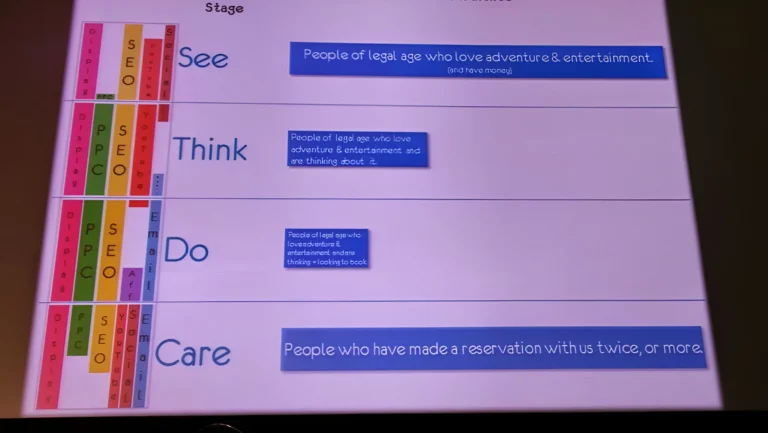
- Understand how content fits into the customer journey.
- Deep Audience Empathy: Uncovering Hidden Needs and Motivations.
- Go beyond basic demographics.
- Understand their values, lifestyles, and pain points.
- Research their needs beyond surveys and analytics.
- Create content that stays relevant.
- Content Pillars and Clusters: Building a Thematic Content Ecosystem.
- Focus on core topics that match your expertise and audience interests.
- Create interconnected content to establish authority.
- Use internal links to guide users and improve SEO.
- Format Diversification: Engaging Your Audience Across Multiple Touchpoints.
- Video: Tutorials, webinars, interviews.
- Audio: Podcasts, audio articles.
- Interactive: Quizzes, calculators.
- Visual: Infographics, data visualizations.
Actionable Strategies and Real-World Examples for Content Success
- The “Problem-Solution-Benefit” Approach: Directly address audience problems:
- Identify their challenges.
- Provide practical solutions and how-to guides.
- Explain the benefits of your advice or offerings.
- Example: A software company’s blog: “Struggling with Project Deadlines? 3 Simple Steps…”
- Leveraging Data and Research: Building Trust and Authority.
- Use industry statistics (e.g., 2025 digital marketing trends).
- Share your original research.
- Cite your sources with links.
- Example: A skincare brand sharing 2025 data on natural ingredient demand.
- Creating “Experience-Driven” Content: Going Beyond Information Delivery. Focus on user experience:
- Visually appealing and easy to navigate.
- Mobile-friendly and fast-loading.
- Example: A cafe with high-quality photos and virtual tours.
- Building Community and Fostering Engagement:
- Encourage comments and discussions.
- Respond to feedback.
- Create opportunities for user-generated content.
- Example: A B2B agency’s live Q&A on 2025 marketing trends.
Website Content Checklist
| Homepage | Clear explanation of business |
| Compelling headline & subheadline | |
| High-quality visuals | |
| Clear CTAs | |
| Easy navigation | |
| Quick overview of key offerings | |
| Trust signals | |
| About Us | Company story, mission, vision, values |
| Team information | |
| Unique Selling Proposition (USP) | |
| Trust-building elements | |
| Products/Services | Dedicated pages per product/service |
| Detailed descriptions | |
| High-quality visuals | |
| Clear pricing (if applicable) | |
| Strong CTAs | |
| Customer testimonials/reviews | |
| Contact Us | Multiple contact options |
| Business hours | |
| Map integration | |
| Welcoming tone | |
| Prompt response reassurance | |
| Blog/Resources | Regularly updated content |
| Industry expertise demonstration | |
| SEO enhancement | |
| Audience value | |
| Keyword incorporation | |
| Privacy Policy | User data handling |
| Terms & Conditions | Website usage rules |
| Sitemap | Page listing all site pages |
| Key Content Elements | Compelling headlines/subheadings |
| High-quality visuals | |
| Clear and concise copy | |
| Strong CTAs | |
| Testimonials & social proof | |
| Keyword strategy | |
| Internal & external links | |
| Contact info prominence |
Measuring Success and Adapting for the Future
- Defining the Right Metrics: Tracking Beyond Vanity Metrics. Focus on:
- Conversion rates.
- Lead quality.
- Customer lifetime value.
- Use analytics tools.
- Set realistic goals.
- The Iterative Approach: Continuously Analyzing, Testing, and Refining Your Strategy.
- Regularly review your content.
- Experiment with formats and channels.
- Stay updated on algorithm changes and user behavior.
- The Future of Strategic Content: Embracing AI and Personalization at Scale.
- Explore AI tools for content creation.
- Prepare for more personalized content.
- Consider the ethics of AI in marketing.
FAQ: Navigating the Nuances of Strategic Website Content
- Keyword research still important? Yes, but it’s now about understanding user intent and broader topics.
- How to stand out? Be unique, understand your audience, and tell compelling stories.
- Biggest mistake? Lack of a clear content strategy linked to business goals.
- Time and resource investment? Depends on your goals and potential ROI; prioritize quality.
- Emerging content for 2025? Think AR/VR and AI-assisted content.
- Ensure accessibility? Follow WCAG guidelines for inclusivity.
- Best way to repurpose? Transform content into various formats.
- Convincing your team? Show data on ROI and strategic alignment.
- B2B vs. B2C content? B2B is often educational; B2C more emotional.
- Will AI replace creators? More likely a collaboration between humans and AI.
Conclusion:Website Content in 2025 and Beyond
With a commanding 53.3% of website traffic originating from organic channels, the opportunity to attract your ideal clients is immense. Strategic SEO content, coupled with a visually captivating web design portfolio, will not only drive targeted traffic to your website but also effectively convert those visitors into valuable leads and closed deals.
To truly excel, deeply understand your audience’s aesthetic and functional needs, build unwavering trust through compelling case studies and testimonials, and showcase your innovative designs across diverse, engaging formats. Embrace a mindset of continuous improvement, always refining your content strategy for optimal results.
Ready to unlock Sasana Design Studio’s full online potential and achieve lasting success?
Let’s discuss how a tailored strategic content plan can elevate your brand and drive significant growth. Contact us today for a consultation!