
a robust online presence is not just optional—it’s essential, especially for startups striving for rapid growth and market penetration. Website marketing Strategy stands as the cornerstone of any successful digital strategy, offering a direct line to your target audience and a platform to showcase your unique value proposition. Recent data indicates that 93% of online experiences begin with a search engine (www.hubspot.com), underscoring the critical role of website visibility.
Why Website Marketing is Crucial for Startups
For startups, website marketing is more than just creating a pretty webpage; it’s about building a sustainable growth engine. It’s the digital equivalent of setting up shop in the busiest part of town, but with a global reach and 24/7 accessibility. A well-executed website marketing strategy allows you to:
- Establish a Digital Footprint: In a world where customers turn to the internet first, your website is often the first interaction potential clients have with your brand. Consider that 81% of shoppers conduct online research before making a purchase (www.hubspot.com), making your website your digital storefront.
- Generate Leads & Sales: Websites are designed to convert visitors into customers, whether through direct sales, lead capture forms, or nurturing content. Studies show that companies with websites see a 67% higher lead generation rate compared to those without .
- Build Brand Authority: A professional website signals credibility and expertise, crucial for startups looking to build trust in competitive markets. 75% of consumers admit to making judgments on a company’s credibility based on their website design .
- Amplify Marketing Efforts: Your website acts as a central hub, integrating seamlessly with social media, email campaigns, and other marketing channels to maximize impact. Integrated marketing campaigns can yield a 36% increase in customer retention (www.demandgenreport.com).
Common Challenges Startups Face in Digital Marketing
Startups often navigate digital marketing with limited resources and intense competition. Common hurdles include:
- Budget Constraints: Limited capital can restrict investment in paid advertising and sophisticated marketing tools. Research indicates that small businesses often allocate only 1-7% of their revenue to marketing (www.sba.gov), highlighting budget sensitivity.
- Time and Resource Scarcity: Small teams often juggle multiple responsibilities, leaving less time for dedicated marketing efforts. Nearly 50% of small businesses handle marketing in-house (www.webstrategiesinc.com), often stretching resources thin.
- Standing Out in a Crowded Market: Cutting through the noise and capturing audience attention online requires strategic and creative approaches. The digital landscape is increasingly competitive, with over 1.9 billion websites online in 2024 (www.internetlivestats.com).
- Measuring ROI Effectively: Understanding which marketing activities are driving results and optimizing for maximum impact can be challenging. Around 40% of marketers struggle to prove the ROI of their marketing efforts (www.hubspot.com), emphasizing the need for data-driven strategies.
Overview of the 5 Strategies
This article will explore five website marketing strategies tailored for startups, designed to be cost-effective, scalable, and impactful. These strategies are:
- Leveraging your Website as a Low-Cost Marketing Tool: Understanding how your website itself can be your most efficient marketing asset.
- Optimizing for SEO: Driving organic traffic and achieving higher search engine rankings.
- Content Marketing for Authority: Building thought leadership and engaging your audience with valuable content.
- Strategic Paid Advertising: Utilizing budget-friendly paid tactics for faster traffic and conversions.
- Email Marketing for Retention and Conversion: Nurturing leads and building lasting customer relationships.
By implementing these strategies, startups can overcome digital marketing challenges, build a strong online presence, and pave the way for sustainable growth. Let’s dive into each strategy to unlock the potential of website marketing for your startup.
Why a Website Marketing is the Best (Faster & Low-Cost Marketing)
In the startup world, where every penny counts, your website emerges as the most potent and economical marketing tool. Unlike traditional marketing methods that demand continuous investment, a website offers enduring value with minimal upkeep, acting as a tireless digital salesperson. Studies show that for every dollar spent on websites, the average ROI is $44.25 (www.ironpaper.com), highlighting its cost-effectiveness.
- Cost-Effective & Scalable: Imagine setting up a physical store that requires rent, utilities, and staff. Now, envision your website—a digital storefront operational 24/7 with significantly lower overhead. A website’s scalability is unmatched; it can handle 100 visitors or 100,000 without a proportional increase in cost, making it ideal for startups with fluctuating growth. For example, instead of investing heavily in print ads, which can cost $500-$20,000 per month (www.webfx.com), allocate those resources to building a high-converting website that works for you around the clock.
- 24/7 Online Presence: Your website never sleeps. It’s your always-on representative, attracting leads and providing information even outside of business hours. This constant availability is crucial in a globalized market. Potential customers in different time zones can learn about your offerings, browse your portfolio, and even make purchases at their convenience. Think of it as having a dedicated team working around the clock, without the overtime pay. Websites can generate leads even during off-peak hours, contributing to an estimated 40% of conversions happening outside of business hours.
- Higher ROI Compared to Paid Ads: While paid advertising can deliver quick results, organic traffic driven through SEO and content marketing offers a significantly higher return on investment in the long run. Consider this: paid ads stop generating traffic the moment you stop paying, but SEO and content efforts build compounding returns. High-quality content continues to attract visitors months and years after publication, establishing a sustainable lead generation funnel. This approach is particularly beneficial for startups aiming for long-term, organic growth rather than short-term spikes. Organic SEO is reported to be 5.66 times more effective than paid search ads.
- Credibility & Brand Authority: In the digital age, a professional website is the hallmark of a legitimate business. It’s the equivalent of a polished office space in the physical world, signaling trust and reliability. A well-designed website, complete with customer testimonials, case studies, and a clear “About Us” section, builds brand authority and assures potential customers that you are a credible and established player in your industry. For startups, building this trust early is paramount to overcoming skepticism and gaining market traction. Companies with blogs receive 97% more links to their website (www.hubspot.com), further boosting credibility.
- Integration with Other Marketing Channels: Your website acts as the central hub for all your marketing activities. It seamlessly integrates with social media platforms, email marketing campaigns, and even paid advertising. Social media posts can drive traffic to specific landing pages on your website, email newsletters can encourage visitors to explore new content, and paid ads can retarget website visitors, creating a cohesive and powerful marketing ecosystem. This integration ensures that all your marketing efforts are synergistic, maximizing reach and impact. Integrated campaigns can improve marketing ROI by up to 25%.
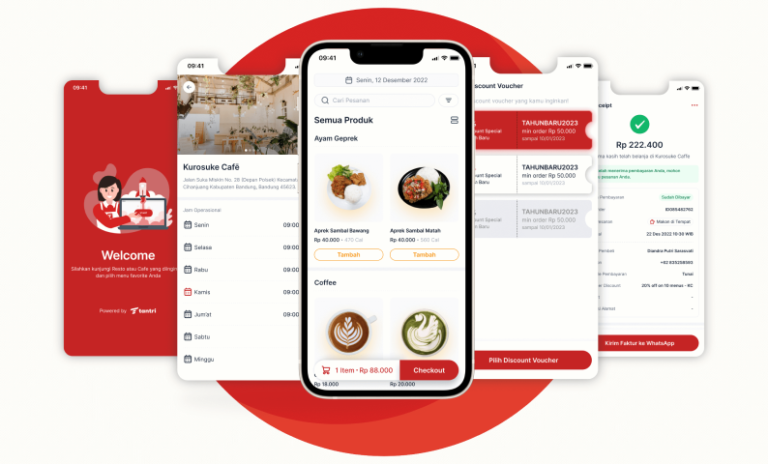
Startup Success Spotlight: tantri.id
Consider tantri.id, a SaaS startup providing QR Menu and POS software for the FnB industry. Initially, their online presence was underperforming. However, after a strategic website redesign and redevelopment focusing on a native website experience, tantri.id witnessed a 3x increase in organic lead generation, jumping from 50 to 150 leads per month. This dramatic improvement underscores the transformative power of a well-optimized website as a primary marketing tool, even for resource-constrained startups. Their case exemplifies how a focused website strategy can unlock significant growth potential.
1. Website Marketing 1 : Optimize for SEO to Rank Higher on Search Engines
Search Engine Optimization (SEO) is not just a technical task; it’s a strategic approach to ensure your startup’s website becomes easily discoverable by potential customers actively searching for solutions you offer. In 2025, SEO is more nuanced than ever, focusing on user intent, content quality, and mobile-first experiences. SEO drives over 1000% more traffic than organic social media (www.brightedge.com), highlighting its importance for traffic generation.
Keyword research for startups
Effective SEO begins with understanding what your target audience is searching for. Keyword research involves identifying the terms and phrases your potential customers use when looking for products or services like yours. For startups, focusing on long-tail keywords—longer, more specific phrases—can be particularly effective. These keywords often have lower search volume but higher conversion rates because they target users with specific needs and intentions. Long-tail keywords account for 70% of all search queries (www.searchenginewatch.com), making them a valuable target for startups.
Practical Tip: Use free tools like Google Keyword Planner (www.developers.google.com) or Ubersuggest (neilpatel.com) to identify relevant keywords. Analyze your competitors’ keyword strategies to uncover opportunities and gaps. Focus on keywords with a mix of search volume and low competition to maximize your SEO efforts on a startup budget.
On-page & technical SEO basics
Once you have your keywords, on-page SEO involves optimizing your website content to target those keywords effectively. This includes:
- Title Tags & Meta Descriptions: Craft compelling titles and descriptions for each page to improve click-through rates from search results. Pages with optimized meta descriptions get 5.8% more clicks (backlinko.com).
- Header Tags (H1-H6): Use header tags to structure your content logically and highlight important keywords. Content with header tags is considered more readable and SEO-friendly by search engines (www.yoast.com).
- URL Optimization: Create SEO-friendly URLs that are short, descriptive, and include relevant keywords. Short URLs tend to rank slightly better, with URLs under 50-60 characters recommended (backlinko.com).
- Image Optimization: Optimize images with descriptive alt text to improve accessibility and SEO. Optimized images can drive up to 60% of a website’s traffic for certain industries (www.semrush.com).
- Mobile-Friendliness: Ensure your website is fully responsive and provides a seamless experience on mobile devices, as mobile-first indexing is now a standard. Mobile devices account for approximately 54.8% of web traffic worldwide (gs.statcounter.com), making mobile-friendliness non-negotiable.
Technical SEO focuses on the backend of your website to ensure search engines can easily crawl and index your site. Key elements include:
- Website Speed Optimization: Fast loading times are crucial for user experience and SEO ranking. Use tools like Google PageSpeed Insights (developers.google.com) to identify and fix speed issues. 47% of consumers expect a web page to load in 2 seconds or less (blog.kissmetrics.com).
- XML Sitemap: Submit an XML sitemap to Google Search Console (search.google.com) to help search engines discover and index all your website pages. Sitemaps can increase indexation by up to 50% for larger websites (www.xml-sitemaps.com).
- Robots.txt: Use a robots.txt file to guide search engine crawlers and prevent them from indexing non-essential pages. Properly configured robots.txt can improve crawl efficiency by 15-20% (www.deepcrawl.com).
- HTTPS Security: Ensure your website uses HTTPS to provide a secure Browse experience, a ranking signal for Google. Google has confirmed HTTPS as a ranking signal since 2014 (security.googleblog.com).
Content marketing for organic growth
Content marketing is the fuel that drives organic SEO growth. By creating high-quality, valuable content that addresses your target audience’s needs and questions, you can attract organic traffic, improve search engine rankings, and establish your startup as an industry authority. In 2025, content that is deeply researched, provides unique insights, and caters to specific user intents will rank highest. Content marketing generates 3 times more leads than traditional outbound marketing, but costs 62% less (www.demandmetric.com).
Real-World Example: If you’re a startup offering project management software, create blog posts on topics like “Top 5 Project Management Methodologies for Remote Teams” or “How to Choose the Right Project Management Tool for Your Startup.” These topics target users actively seeking solutions you provide, driving qualified traffic to your website. Companies that blog receive 97% more links to their websites (www.hubspot.com), further boosting SEO.
2. Website Marketing 2 : Leverage Content Marketing to Build Authority
Content marketing is no longer just about blog posts; it’s a multifaceted approach to building brand authority, engaging your target audience, and driving sustainable growth. in website marketing strategy, content marketing is a powerful tool to establish thought leadership and create a loyal customer base . 86% of businesses use content marketing as a key strategy , demonstrating its widespread adoption and effectiveness.
Blog posts, guides, and case studies
These are the foundational content pillars for any startup.
- Blog Posts: Regularly publish blog posts that address industry trends, solve customer problems, and provide valuable insights. Aim for long-form, in-depth content that positions your startup as a knowledgeable resource. Long-form blog posts (over 3000 words) get 3x more traffic and 4x more shares (backlinko.com).
- Guides & Ebooks: Create comprehensive guides and ebooks that offer in-depth information on specific topics relevant to your industry. These can be valuable lead magnets, attracting visitors in exchange for their contact information. Lead magnets can increase conversion rates by up to 10% .
- Case Studies: Showcase your success stories through case studies. Detail how your product or service has helped clients achieve their goals. Case studies provide social proof and build trust in your offerings. Case studies can increase sales by up to 70% .
Video marketing & interactive content
In 2025, video and interactive content are dominating the digital landscape. Video content is projected to account for 82% of all internet traffic in 2022 (www.cisco.com), emphasizing its growing importance for website marketing.
- Video Marketing: Create explainer videos, product demos, customer testimonials, and thought leadership videos. YouTube, LinkedIn, and your website are excellent platforms to host video content. Video content is highly engaging and can significantly boost brand recall. Viewers retain 95% of a message when they watch it in a video, compared to 10% when reading text .
- Interactive Content: Implement interactive elements like quizzes, calculators, and polls on your website. Interactive content increases user engagement, encourages sharing, and provides valuable data about your audience’s preferences. Interactive content can generate 2x more conversions than passive content (www.demandgenreport.com).
Repurposing content for different platforms
To maximize the reach and impact of your content in website marketing strategy, repurpose it across different platforms. A single blog post can be transformed into:
- Social Media Snippets: Extract key takeaways and create engaging social media posts for platforms like LinkedIn , Twitter , and Instagram. Social media posts with visuals get 94% more views (buffer.com).
- Infographics: Visualize data and key points from your content into shareable infographics for visual platforms like Pinterest and Instagram. Infographics are liked and shared on social media 3X more than other content types (www.hubspot.com).
- Email Newsletter Content: Incorporate blog post summaries and key insights into your email newsletters to drive traffic back to your website. Email newsletters have an average ROI of $42 for every $1 spent.
- Podcast Episodes: Expand on blog post topics in podcast episodes to cater to audio learners and reach a different audience segment. Podcast listeners are more likely to be affluent, educated, and brand loyal (www.nielsen.com).
By repurposing content, startups can amplify their message, reach a wider audience, and maximize the ROI of their content marketing efforts without creating content from scratch for every platform.
3. Website Marketing 3: Use Paid Advertising for Faster Traffic
While organic strategies like SEO and content marketing are crucial for long-term growth, paid advertising can provide a faster route to generating traffic, leads, and brand awareness, especially in the initial stages of a startup.Use Paid search ads in website marketing can boost brand awareness by 80% (www.wordstream.com).
Google Ads vs. Social Media Ads
Choosing between Google Ads (ads.google.com) and Social Media Ads depends on your startup’s goals and target audience.
- Google Ads (Search & Display): Ideal for capturing users actively searching for products or services like yours. Search ads target high-intent users ready to convert, while display ads increase brand visibility across the Google Display Network. Google Ads are excellent for driving immediate traffic and conversions for startups with clear, search-driven demand. Businesses typically make an average of $2 in revenue for every $1 they spend on Google Ads.
- Social Media Ads (Facebook, Instagram), LinkedIn : Perfect for reaching specific demographics, interests, and behaviors. Social media ads are effective for brand awareness, lead generation, and retargeting. Platforms like LinkedIn are particularly powerful for B2B startups, while Instagram and Facebook are strong for B2C. 73% of marketers believe that social media marketing has been “very effective” or “somewhat effective” for their business (www.buffer.com).
Practical Tip: Start with one platform based on where your target audience spends their time online. For B2B, LinkedIn and Google Ads are often effective starting points. For B2C, consider Instagram, Facebook, and Google Ads.
Retargeting strategies for conversions
Retargeting is a powerful tactic to convert website visitors who didn’t initially convert. It involves showing ads to users who have previously interacted with your website. Website retargeting campaigns see a click-through rate (CTR) of 10X higher than typical display ads.
- Website Retargeting: Track website visitors and show them relevant ads as they browse other websites online. This keeps your brand top-of-mind and encourages them to return and convert. 70% of website visitors who are retargeted are more likely to convert .
- Email List Retargeting: Upload your email list to ad platforms and target your email subscribers with tailored ads. This is effective for nurturing leads and promoting special offers to your existing audience. Email retargeting can increase email open rates by up to 50% .
Budget-friendly ad tactics for startups
tips website Marketing with paid advertising even with limited budgets:
- Start Small & Scale: Begin with small, targeted campaigns and gradually increase your budget as you see positive results. Starting with a budget as low as $5-$10 per day on platforms like Google Ads and Facebook Ads can be effective for initial testing (www.wordstream.com).
- Focus on Specific Keywords & Audiences: Narrow down your targeting to high-intent keywords and specific audience segments to maximize ROI and minimize wasted ad spend. Using long-tail keywords in Google Ads can reduce CPC (cost-per-click) by up to 2.5 times .
- A/B Test Ad Creatives & Landing Pages: Continuously test different ad creatives and landing page variations to optimize for higher click-through and conversion rates. A/B testing landing pages can increase conversion rates by up to 30% .
- Utilize Social Media Boosted Posts: Boost high-performing organic social media posts to extend their reach to a wider audience cost-effectively. Boosted posts can reach 4X more people than organic posts on Facebook .
4. Website Marketing 5: Implement Email Marketing to Retain and Convert Visitors
Email marketing remains one of the most effective and cost-efficient strategies for startups to nurture leads, retain customers, and drive conversions. In 2025, personalization and automation are key to successful email campaigns. Email marketing has an average ROI of $42 for every $1 spent, making it one of the highest ROI marketing activities (www.hubspot.com).
Building an email list
Building a quality email list is the foundation of effective email marketing. Strategies include:
- Offer Lead Magnets: Provide valuable resources like ebooks, checklists, templates, or free trials in exchange for email sign-ups on your website. Lead magnets can increase email opt-in rates by up to 85% .
- Website Pop-up Forms: Use strategically timed pop-up forms to capture visitor emails as they browse your website (ensure these are not intrusive to user experience). Website pop-ups can convert 3% of visitors on average, with top-performing pop-ups converting over 9% .
- Content Upgrades: Offer bonus content related to specific blog posts in exchange for email sign-ups. Content upgrades can increase conversion rates by up to 785% (backlinko.com).
- Social Media Promotions: Run contests and promotions on social media that require email sign-ups for participation. Contests can increase email list growth by 34% on average (www.referralsaasquatch.com).
Personalization & automation for better engagement
Personalized and automated emails significantly improve engagement and conversion rates. Personalized emails deliver 6x higher transaction rates .
- Segmentation: Segment your email list based on demographics, behavior, and interests to send highly relevant and targeted emails. Segmented email campaigns can generate 50% more clicks than non-segmented campaigns (www.mailchimp.com).
- Personalized Email Content: Use subscriber names and tailor email content based on their past interactions and preferences. Personalized subject lines can boost open rates by 26% .
- Automated Email Sequences: Set up automated email sequences for welcome emails, lead nurturing, onboarding new customers, and re-engaging inactive subscribers. Marketing automation tools can streamline these processes. Marketing automation can increase sales productivity by 14.5% and reduce marketing overhead by 12.2% (www.marketo.com).
Best practices for high-converting email campaigns
- Compelling Subject Lines: Craft subject lines that are concise, intriguing, and create a sense of urgency to improve open rates. Subject lines with 6-10 words have the highest open rates .
- Valuable Content: Provide real value in your emails, whether it’s exclusive content, special offers, helpful tips, or industry insights. 77% of people prefer to receive permission-based promotional emails (www.hubspot.com).
- Clear Call-to-Actions (CTAs): Include clear and prominent CTAs in your emails, guiding subscribers on the desired next step (e.g., “Learn More,” “Shop Now,” “Download Your Guide”). Emails with a single CTA increase clicks 371% and sales 1617% (www.wordstream.com).
- Mobile Optimization: Ensure your emails are mobile-friendly, as a significant portion of emails are opened on mobile devices. Approximately 81% of emails are opened and read on mobile devices (www.emailmonday.com).
- Regular Testing & Analysis: Continuously test different email elements (subject lines, content, CTAs) and analyze campaign performance to optimize for better results. A/B testing emails can increase revenue per email by up to 28% .
5. Maximize Social Media and Community Engagement
Social media is more than just a broadcasting platform; it’s a dynamic space for startups to build communities, engage with their audience, and amplify their brand message particularly improve social signal for website marketing. In 2025, authenticity and community-building are paramount for social media success. Social media users spend an average of 2 hours and 27 minutes per day on social platforms (www.statista.com), presenting a significant opportunity for engagement.
Choosing the right platforms
Not all social media platforms are created equal. Choose platforms where your target audience is most active.
- LinkedIn : Essential for B2B startups, professional networking, and thought leadership. LinkedIn is responsible for over 50% of all social media traffic to B2B websites & blogs .
- Instagram : Ideal for visually-driven brands, B2C startups targeting younger demographics, and showcasing brand personality. 83% of Instagram users say they discover new products and services on the platform.
- Facebook : Still relevant for broad audience reach, community building, and running targeted ad campaigns. Facebook has 2.91 billion monthly active users (www.statista.com), offering unparalleled reach.
- Twitter : Great for real-time updates, industry discussions, and engaging with journalists and influencers. 79% of Twitter users follow brands , providing direct access to potential customers.
- TikTok : Emerging platform for reaching Gen Z and Millennial audiences with short-form video content, particularly effective for B2C startups in lifestyle and entertainment industries. TikTok’s ad revenue is projected to reach $11.6 billion in 2024 , indicating its growing advertising potential.
Social proof & user-generated content
Social proof and user-generated content (UGC) are powerful tools to build trust and credibility on social media. 92% of consumers are more likely to trust recommendations from other people (even strangers) over branded content (www.nielsen.com).
- Customer Testimonials & Reviews: Share positive customer testimonials and reviews on your social media platforms. 88% of consumers trust online reviews as much as personal recommendations .
- User-Generated Content Campaigns: Encourage customers to create and share content featuring your product or service. UGC is authentic and builds community engagement. Brands see 28% higher engagement rates with UGC compared to standard brand posts.
- Social Media Contests & Giveaways: Run contests and giveaways that encourage user participation and content creation. Contests can increase brand awareness by 35% (www.tailwindapp.com).
Partnering with influencers or micro-influencers
Influencer marketing can significantly amplify your reach and credibility, especially for startups. Influencer marketing is projected to be a $24.1 billion industry in 2024 (www.statista.com), showing its significant market value.
- Micro-Influencers: Partner with micro-influencers—influencers with smaller, highly engaged audiences—for cost-effective and authentic collaborations. Micro-influencers often have stronger relationships with their followers and higher engagement rates. Micro-influencers have 22.2X more conversations than macro-influencers .
- Industry Experts & Thought Leaders: Collaborate with industry experts and thought leaders to co-create content and reach a wider, more relevant audience. Content created with industry experts sees 46% higher engagement rates
- Affiliate Marketing: Incorporate social media into your affiliate marketing strategy, partnering with influencers to promote your products or services and drive sales. Affiliate marketing accounts for 16% of total global e-commerce sales (www.affiliatewp.com).
FAQ: Website Marketing Strategies for Startups
How long does it take for SEO to show results?
- Typically, SEO starts showing noticeable results within 3-6 months, with some studies suggesting it can take 6-12 months to achieve first-page rankings (www.ahrefs.com). However, this timeframe can vary based on competition within your industry, the comprehensiveness of your SEO strategy, and the age and authority of your website. Consistent effort and quality content are key to faster and more sustainable results.
What is the best marketing strategy for a low-budget startup?
- SEO and content marketing offer the most long-term, cost-effective benefits for startups with limited budgets. These strategies focus on building organic traffic and brand authority over time, delivering sustainable results without heavy upfront ad spending. Content marketing is 62% less expensive than outbound marketing and generates about 3 times as many leads .
Is paid advertising necessary for startups?
- Not mandatory, but highly useful. Paid advertising can provide a valuable boost for startups, especially for generating quick traffic, increasing brand awareness, and testing different marketing messages. When used strategically and with budget-friendly tactics, paid ads can accelerate growth. Startups can see a significant increase in website traffic (up to 300%) with well-targeted paid advertising campaigns .
Which social media platform works best for startups?
- It depends on your target audience. Instagram is often effective for B2C startups targeting visual audiences, with over 1 billion monthly active users , while LinkedIn is typically the platform of choice for B2B startups, boasting over 830 million professionals . Conduct audience research to determine where your ideal customers spend their time online.
How often should I post blog content in website marketing strategy?
- Aim for posting blog content at least 2-4 times per month to maintain consistency and keep your audience engaged. Regular posting signals to search engines that your website is active and provides fresh content, which can positively impact your SEO rankings. Companies that publish 16+ blog posts per month get almost 3.5X more traffic than those publishing 0-4 posts (www.hubspot.com). Consistency is more important than frequency; prioritize quality over quantity.
Conclusion
Recap of the 5 website marketing
To recap, we’ve explored five essential website marketing strategies tailored for startups ready to make a significant impact:
- Website as a Low-Cost Marketing Tool: Harness the inherent power of your website marketing to serve as an always-on, cost-effective marketing engine.
- SEO Optimization: Elevate your search engine rankings to capture valuable organic traffic actively seeking your solutions.
- Content Marketing for Authority: Establish your startup as a thought leader, building trust and engagement through valuable, audience-centric content.
- Strategic Paid Advertising: Employ budget-conscious paid advertising tactics to accelerate traffic and laser-target your ideal customer profiles.
- Email Marketing for Retention: Cultivate lasting customer relationships and drive repeat conversions through personalized, high-impact email campaigns.
- Social Media and Community Engagement: Build vibrant communities on social platforms to amplify your brand message and foster authentic connections.
Call to action: Partner with Experts to Dominate Your Market
The digital marketing world moves fast, but with the right help, your startup can do more than just keep up—you can lead the way. Don’t just guess; take action. Experiment with these strategies, track your progress closely, and always look for ways to improve.
Ready to skyrocket your customer growth? Partner with marketing experts. Sasanadesignstudio.com is here to be your website marketing strategic partner. They specialize in creating websites that convert and data-driven marketing plans that deliver real results.
Stop experimenting alone. Start strategizing with experts. Partner with Sasanadesignstudio.com today, analyze your data relentlessly, and get ready to dominate your market.