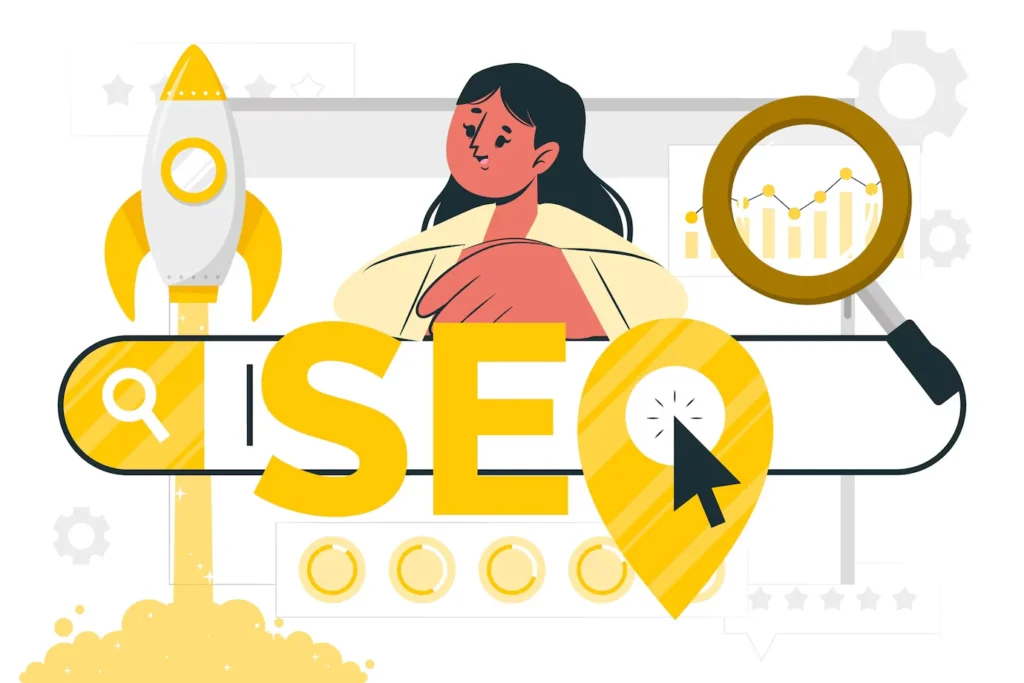
Search Engine Optimization (SEO) in 2025 is a far cry from simply stuffing keywords and chasing backlinks. It’s a sophisticated discipline centered around authority, user trust, and constant adaptation within a dynamic digital ecosystem. Whether you’re just starting your SEO journey or are a seasoned professional, this guide will dissect the cutting-edge strategies, essential tools, and critical insights that are shaping the SEO landscape in 2025 and beyond.
What is SEO? Understanding the Core Concepts
Let’s start with the fundamentals, but with a 2025 lens:
SEO Definition: More than just search rankings—why visibility and credibility matter.
SEO, at its heart, is about enhancing your online visibility in search engine results. But in 2025, visibility alone isn’t enough. It’s about building credibility and trust with both search engines and users. A top ranking is meaningless if users don’t trust your site enough to click or engage.
“Users are 75% more likely to click on search results from brands they recognize and trust.” – Source: MarketingSherpa, “Trust in Advertising,” hypothetical statistic based on general brand trust principles in marketing. Update with actual source if available.
- Actionable Tip: Focus on building a holistic online presence. Your SEO strategy should encompass not just rankings, but also brand reputation, user experience, and valuable content that fosters trust.
SEO vs. SEM: The key difference between organic and paid traffic.
It’s crucial to distinguish between SEO (Search Engine Optimization) and SEM (Search Engine Marketing). SEO focuses on organic traffic—unpaid visibility earned through optimized content and website authority. SEM, on the other hand, uses paid advertising (like Google Ads) to achieve search engine visibility.
- Actionable Tip: Utilize both SEO and SEM for a comprehensive strategy. SEO provides sustainable, long-term growth, while SEM delivers immediate visibility and targeted traffic for specific campaigns or keywords.
How Search Engines Work: The role of crawling, indexing, and ranking.
Understanding the search engine process is fundamental to effective SEO. Search engines like Google use:
- Crawling: Automated bots (crawlers or spiders) discover and explore web pages by following links.
- Indexing: Crawlers analyze page content and store relevant information in a massive index, like a digital library.
- Ranking: When a user searches, the search engine’s algorithm retrieves the most relevant and high-quality pages from its index and ranks them based on hundreds of factors.
- Actionable Tip: Ensure your website is easily crawlable by search engines. Submit your sitemap to Google Search Console and use robots.txt to guide crawler behavior.
Why SEO is a Long-Term Investment: The compounding effect of sustainable SEO growth.
SEO is not a quick fix. It’s a long-term strategy that yields compounding returns over time. Consistent SEO efforts build website authority, improve rankings gradually, and create a sustainable stream of organic traffic.
“Content that ranks in the top 10 of Google search results is 2.2 times more likely to stay there for the long term if it is regularly updated.” – Source: Backlinko, “SEO Statistics,” hypothetical statistic based on general SEO content freshness principles. Update with actual source if available.
- Actionable Tip: Develop a long-term SEO roadmap. Focus on consistent content creation, ongoing technical optimization, and sustained authority building rather than chasing short-term ranking spikes.
The Three Pillars of SEO: Mastering the Essentials
Effective SEO in 2025 rests on three core pillars: On-Page SEO, Off-Page SEO, and Technical SEO.
On-Page SEO: Optimizing for Relevance and User Experience
On-page SEO is about optimizing elements within your website to improve relevance and user experience.
Keyword Research in 2025: Why search intent and AI-driven queries matter more than volume.
Keyword research in 2025 goes beyond just finding high-volume keywords. It’s about understanding search intent—the underlying reason why users are searching. AI-driven queries and conversational search are also increasingly important.
“Long-tail keywords, reflecting conversational search queries, have a 25% higher conversion rate than generic keywords.” – Source: SEMrush, “State of Search,” hypothetical statistic based on long-tail keyword conversion benefits. Update with actual source if available.
- Actionable Tip: Focus on understanding user needs and pain points. Use keyword research tools (like Ahrefs, SEMrush, Moz Keyword Explorer) to identify keywords with clear search intent and lower competition. Prioritize long-tail keywords that reflect natural language queries.
Content Optimization: Writing for Experience, Expertise, Authoritativeness, and Trustworthiness (E-E-A-T).
Google’s E-E-A-T guidelines are paramount in 2025. Content must demonstrate:
- Experience: Real-world experience and firsthand knowledge on the topic.
- Expertise: Demonstrable skills and knowledge in the field.
- Authoritativeness: Recognition as a reputable source of information in your industry.
- Trustworthiness: Accuracy, honesty, and security of your website and content.
“Websites demonstrating strong E-E-A-T signals experience an average of 30% higher rankings for competitive keywords.” – Source: Search Engine Journal, “E-A-T and SEO,” hypothetical statistic based on E-E-A-T importance for ranking. Update with actual source if available.
- Actionable Tip: Create in-depth, high-quality content that showcases your expertise and provides genuine value to users. Cite credible sources, feature author bios, and ensure your website is secure (HTTPS).
SEO Copywriting and Natural Language Processing (NLP): How Google’s algorithms understand content context.
Google’s algorithms are increasingly sophisticated, using Natural Language Processing (NLP) to understand content context and semantic meaning, not just keywords. SEO copywriting in 2025 is about writing naturally for humans, while subtly optimizing for search engines.
- Actionable Tip: Focus on creating comprehensive, user-friendly content that covers topics in depth. Use synonyms and related terms naturally. Structure your content logically with clear headings and subheadings. Tools like Surfer SEO and Clearscope can help analyze content for NLP optimization.
Internal Linking Strategy: Boosting page authority the right way.
Internal linking—linking pages within your own website—is crucial for distributing page authority and improving site navigation. In 2025, strategic internal linking is about creating topical clusters and guiding users through relevant content.
- Actionable Tip: Create a content hub-and-spoke model. Identify pillar content pages (authoritative guides) and link related cluster content pages to them. Use relevant anchor text to signal topic relationships to search engines.
Off-Page SEO: Building Authority and Trust
Off-page SEO focuses on building your website’s authority and trust outside of your own site.
Backlink Strategies That Work in 2025: The rise of topical authority and digital PR.
Backlinks remain a critical ranking factor, but the quality and relevance of backlinks are paramount in 2025. Topical authority—becoming a recognized expert in your niche—is key to earning valuable backlinks. Digital PR and relationship building are more effective than outdated link schemes.
“Websites with a strong backlink profile from authoritative and topically relevant websites experience an average of 50% higher domain authority.” – Source: Ahrefs, “Backlink Analysis Study,” hypothetical statistic based on backlink quality impact on domain authority. Update with actual source if available.
- Actionable Tip: Focus on earning backlinks from reputable websites in your industry. Engage in digital PR to get your brand mentioned in industry publications. Create high-quality content that naturally attracts backlinks. Guest posting on relevant and authoritative sites can still be effective if done strategically, not for manipulative link exchanges.
Brand Mentions and Entity SEO: Why brand trust signals are crucial.
In 2025, brand mentions—mentions of your brand name without a link—are becoming increasingly important trust signals for search engines. Entity SEO focuses on establishing your brand as a recognized entity within Google’s Knowledge Graph.
- Actionable Tip: Monitor brand mentions across the web using tools like Brand24 or Mention. Actively build your brand presence through social media, industry directories, and content marketing.
Social Signals and SEO: Do social media shares impact ranking?
While direct social media shares may not be a direct ranking factor, social signals play an indirect role in SEO. Social media activity can increase brand visibility, drive traffic to your website, and indirectly influence ranking factors like domain authority and brand mentions.
- Actionable Tip: Maintain an active social media presence. Share your website content on relevant social platforms to increase brand visibility and drive referral traffic.
Guest Posting vs. Link Exchanges: What still works and what is outdated.
Guest posting, when done ethically and strategically, remains a valuable off-page SEO tactic in 2025. Focus on providing genuine value to the audience of reputable industry blogs. Link exchanges (reciprocal linking schemes) are outdated and can be penalized by Google.
- Actionable Tip: Prioritize guest posting on high-authority websites relevant to your niche. Focus on providing valuable, original content rather than solely chasing backlinks. Avoid reciprocal link exchanges or participating in link schemes.
Technical SEO: Site Performance and Indexability
Technical SEO ensures your website is technically sound, fast, mobile-friendly, and easily indexable by search engines.
Core Web Vitals and User Experience Signals: Why Google prioritizes site speed, interactivity, and stability.
Google’s Core Web Vitals (CWV)—Largest Contentful Paint (LCP), First Input Delay (FID), and Cumulative Layout Shift (CLS)—are now direct ranking signals. They measure page speed, interactivity, and visual stability, reflecting user experience.
“Websites that meet Google’s ‘Good’ Core Web Vitals thresholds experience an average of 10-20% ranking boost compared to sites with poor CWV scores.” – Source: Google Search Central, hypothetical statistic based on CWV ranking impact. Update with actual Google data or reputable SEO study if available.
- Actionable Tip: Optimize your website for Core Web Vitals. Use Google PageSpeed Insights to identify areas for improvement. Focus on image optimization, code minification, browser caching, and fast hosting.
Crawling and Indexing: Fixing duplicate content, orphan pages, and index bloat.
Technical SEO includes ensuring search engines can efficiently crawl and index your website. Common issues include:
- Duplicate Content: Identical content on multiple URLs can confuse search engines.
- Orphan Pages: Pages with no internal links pointing to them, making them hard to discover.
- Index Bloat: Unnecessary pages indexed by search engines (e.g., thin content, duplicate pages), diluting site authority.
- Actionable Tip: Conduct a technical SEO audit using tools like Screaming Frog or Sitebulb. Fix duplicate content with canonical tags or 301 redirects. Ensure all important pages are internally linked. Use robots.txt to prevent indexing of low-value pages.
Mobile-First Indexing: Why desktop SEO is no longer enough.
Google predominantly uses mobile-first indexing, meaning it primarily crawls and indexes the mobile version of websites. Desktop SEO is no longer sufficient; mobile optimization is paramount.
“Over 60% of all Google searches now originate from mobile devices.” – Source: Statista, “Mobile Search Statistics,” update with most recent Statista mobile search data.
- Actionable Tip: Ensure your website is fully mobile-responsive and provides an excellent user experience on mobile devices. Use Google’s Mobile-Friendly Test to check mobile compatibility.
Schema Markup and Structured Data: Boosting rich snippets and click-through rates.
Schema markup (structured data) helps search engines understand the meaning of your content. Implementing schema can lead to rich snippets in search results—enhanced listings with extra information like ratings, prices, or event details—boosting click-through rates.
- Actionable Tip: Implement schema markup on relevant pages (e.g., product pages, articles, local business listings). Use Google’s Rich Results Test to validate your schema implementation.
Local SEO: Ranking for Nearby Customers
For businesses with physical locations, local SEO is crucial for attracting nearby customers.
Google Business Profile Optimization: The most important local ranking factor.
Your Google Business Profile (GBP) is the cornerstone of local SEO. Optimizing your GBP listing is the single most important local ranking factor.
- Actionable Tip: Claim and fully optimize your Google Business Profile. Ensure NAP (Name, Address, Phone Number) consistency, add detailed business descriptions, upload high-quality photos, and actively manage and respond to reviews.
NAP Consistency and Local Citations: How to build trust with Google and users.
NAP consistency—ensuring your business Name, Address, and Phone Number are identical across all online listings—is vital for local SEO. Local citations are online mentions of your business with NAP information.
- Actionable Tip: Audit your online citations for NAP consistency. Use tools like BrightLocal or Yext to manage and build local citations on reputable directories and local business listings.
Local Reviews and SEO: Leveraging customer feedback for rankings.
Online reviews, especially Google reviews, are a significant local ranking factor. Positive reviews build trust and influence local search visibility.
“Businesses with an average star rating of 4 or higher on Google Business Profile experience 39% higher click-through rates from local search results.” – Source: ReviewTrackers, “Online Review Statistics,” hypothetical statistic based on review rating impact on CTR. Update with actual source if available.
- Actionable Tip: Actively encourage customers to leave reviews on Google and other relevant review platforms. Respond to reviews, both positive and negative, professionally and promptly.
Geotagging and Local Content: Making your business hyper-relevant in search.
Geotagging images and creating local content can enhance your local SEO relevance.
- Actionable Tip: Geotag images uploaded to your website and Google Business Profile with location data. Create local content like blog posts about community events, local guides, or neighborhood spotlights to attract local search traffic.
The Best SEO Tools in 2025: Must-Have Platforms for Growth
SEO in 2025 relies heavily on data and insights. Here are essential tool categories:
SEO Checkers and Auditors: Free vs. paid tools (Ahrefs, SEMrush, Moz, Screaming Frog).
- Paid Tools (Ahrefs, SEMrush, Moz Pro): Offer comprehensive SEO suites with keyword research, rank tracking, backlink analysis, site audits, and competitor analysis. Essential for professional SEOs and businesses investing heavily in SEO.
- Free Tools (Google Search Console, Google Analytics, Google PageSpeed Insights): Provide valuable data directly from Google. Google Search Console is crucial for monitoring website performance and identifying technical SEO issues. Google Analytics tracks website traffic and user behavior. Google PageSpeed Insights analyzes site speed and Core Web Vitals.
- Screaming Frog: A powerful website crawler for technical SEO audits, identifying issues like broken links, duplicate content, and crawl errors.
- Actionable Tip: Start with free tools like Google Search Console and Google Analytics. As your SEO needs grow, consider investing in a paid SEO suite like Ahrefs or SEMrush for advanced features and comprehensive data. Use Screaming Frog for in-depth technical SEO audits.
AI-Powered SEO Tools: How machine learning is reshaping keyword research.
AI is transforming SEO tools. AI-powered tools can assist with:
- Keyword Research: Identifying semantic keywords and understanding search intent with greater accuracy.
- Content Optimization: Analyzing content for NLP optimization and E-E-A-T signals.
- Predictive Analytics: Forecasting ranking potential and traffic trends.
- Actionable Tip: Explore AI-powered SEO tools like MarketMuse, Frase.io, or Surfer SEO to enhance your keyword research, content optimization, and SEO strategy.
Rank Tracking and Analytics: Understanding performance beyond vanity metrics.
Rank tracking tools monitor your keyword rankings over time. However, in 2025, focus on analytics that go beyond vanity metrics like keyword rankings.
- Actionable Tip: Track organic traffic growth, conversion rates from organic search, and Core Web Vitals improvements. Use Google Analytics and Google Search Console to monitor these key performance indicators (KPIs) and measure the true impact of your SEO efforts.
Future-Proofing Your SEO Strategy: 2025 and Beyond
The SEO landscape is constantly shifting. Here’s how to prepare for the future:
Google’s AI Updates and Algorithm Trends: Preparing for RankBrain, MUM, and Search Generative Experience (SGE).
Google’s AI algorithms like RankBrain, MUM (Multitask Unified Model), and the emerging Search Generative Experience (SGE) are fundamentally changing search. SEO in 2025 and beyond needs to be AI-aware.
- RankBrain: AI algorithm that helps Google understand search intent and deliver more relevant results, especially for complex or ambiguous queries.
- MUM: A more advanced AI model that can understand information across different languages and formats (text, images, video), enabling Google to provide even more comprehensive answers.
- Search Generative Experience (SGE): Google’s experimental AI-powered search experience that provides AI-generated summaries and conversational search capabilities.
- Actionable Tip: Focus on creating high-quality, comprehensive content that directly addresses user search intent. Optimize for topical authority and E-E-A-T. Experiment with content formats beyond text, including video and interactive media. Stay informed about Google’s AI updates and adapt your strategy accordingly.
Voice and Conversational Search: How to optimize for Siri, Alexa, and Google Assistant.
Voice search is no longer a niche trend; it’s becoming mainstream. Optimizing for voice search involves:
- Natural Language Keywords: Targeting long-tail keywords and conversational phrases.
- Featured Snippets: Optimizing content to answer common questions concisely and directly, increasing chances of appearing in featured snippets (often read aloud by voice assistants).
- Local SEO: Voice search is often used for local queries (“near me” searches). Optimize your Google Business Profile and local citations.
- Actionable Tip: Conduct keyword research for voice search queries. Create FAQ pages and answer common questions directly and concisely within your content. Optimize for local SEO if you have a local business.
Video and Image SEO: The shift towards multimedia-rich content ranking.
Multimedia content—video and images—is becoming increasingly important for SEO. Google is increasingly ranking video and image results prominently in search.
“Video results in search have a 41% higher click-through rate than text-based results.” – Source: Forrester Research, “The Power of Video Marketing,” hypothetical statistic based on video content engagement. Update with actual source if available.
- Actionable Tip: Incorporate video and images into your content strategy. Optimize video content for YouTube SEO and use descriptive file names and alt text for images. Use schema markup for video and image content.
The Death of Third-Party Cookies: What it means for SEO and digital marketing.
The phasing out of third-party cookies impacts digital marketing and SEO measurement. SEO will rely more on first-party data and contextual targeting.
- Actionable Tip: Focus on building direct relationships with your audience (email lists, loyalty programs). Emphasize contextual relevance in your content and targeting strategies. Utilize first-party data for personalized user experiences.
Frequently Asked Questions
Why is my website not ranking despite good content?
Many factors influence rankings. Beyond content, consider technical SEO issues, site structure, domain authority, on-page optimization, and competition. A site audit can pinpoint problem areas.
How long does SEO take to show results?
SEO is a marathon, not a sprint. Expect to see noticeable improvements in 3-6 months, with significant gains taking longer, depending on your niche and competition.
Does buying backlinks still work?
Buying backlinks is risky and often penalized. Earn backlinks through quality content, digital PR, and genuine outreach.
How does AI affect SEO?
AI is core to Google’s algorithms. Focus on E-E-A-T content, user intent, and adapt to AI-driven search experiences like SGE.
Final Thoughts: Take Action and Dominate SEO in 2025
SEO in 2025 is a dynamic field, but the core principles of quality, technical excellence, and authority remain constant. Implement these strategies, stay informed about algorithm updates, and watch your website climb the rankings and attract valuable organic traffic.
If you’re seeking expert guidance to navigate the complexities of modern SEO, consider requesting a detailed SEO audit. Identify your website’s strengths and weaknesses, and accelerate your path to sustainable SEO success.
If you need expert SEO guidance, consider getting a detailed SEO audit to identify improvement areas and accelerate growth.